Enter your email address:

Delivered by FeedBurner

Homeschooling The Well Prepared Child: parts of a plant
Showing posts with label parts of a plant. Show all posts

Tuesday, January 6, 2015

Celery Scrap Gardening

 This post contains Affiliate Links.

      I have heard of scrap gardening, but we never really thought to try it. We bought celery about a month ago, and I kept looking at thinking... What if? What if I put it into a bowl of water? What if I didn't put it in with the scraps to go out to the compost bin? What if I didn't throw it into the food scrap bowl to feed the pig? What if.. What if it grew? 
     So I asked Zoey, "What if?" and she said, "Let's do it!" and guess what it did... 
IT GREW!

And it Grew!
 To the point we thought, "What if... we planted it?"

 Zoey went out to the yard for the good gardening soil. We got out a Terra Cotta pot. She filled it half way with soil. 
She put the celery plant in the pot and then used the rest of the soil to cover up the rest of the plant. 

  Suddenly, our big celery plant, did not look so big. But that is okay, because it grows larger every day.

 We sat our celery plant in the kitchen window where it is nice and sunny, even in winter time. It has already grown bigger since we took this picture. Now we wonder, "What if it grows large enough that we can eat it?" :)

We are working with these onion ends now. Hmmm... What if? 

Want to see what else you can grow from scraps in your kitchen? Check out this article on 25 Foods You Can Re-Grow Yourself Using Kitchen Scraps. 

Have you tried this before? How did it work for you? 


Disclosure: I am Amazon Affiliate and may receive a small compensation for including links on my blog. Buying through my links is not necessary, just appreciated. Amazon does not charge extra for linked items recommended by their affiliates.  I only recommend products that I use and trust OR plan on using in the future. Please buy responsibly and do your own product research before buying anything online. 

Saturday, November 29, 2014

Pumpkins, Knives, and Becoming Independent


     By the time I was 10, I was cooking and preparing all the meals for my whole family on a daily basis. On my own. Both of my parents worked full time jobs and I always felt cooking and cleaning was my way of helping out the family. That is how I learned to use a knife. The way I held the knife and cut things always scared my parents to death. They always thought it looked like I was going to cut myself. I slice things, cutting straight towards my hand. Always have, always will. Yes, I have sliced myself on occasion, but nothing terribly bad. I've never had stitches unless they were surgery related on something normal. You couldn't tell me my method was ever anything dangerous, because I've never felt any danger or severely hurt myself. I have learned to have great control over the knife, even if it was pointed straight towards my body. 
     Now you ask why I am telling you this... cause my daughter is 10. She has not been made to cook entire meals on her own, we do them together. I am over protective as a mother and at the same time, I try teach her to do everything on her own. Using a knife, I realized lately, is not one of those skills I have let her practice much on her own. I have always hovered over her, tell her what to do, what not to do. 'Don't hold it like that', 'Never cut straight towards your body.' Everything my parents have told me or told me not to do over the years, (and I ignored) has come out of my mouth. I need to let go of the control and just let her learn on her own. But, GOODNESS, it is scary! 
     Why wouldn't she do things like me? I am her model. Everything she knows, she has learned by watching me. We do not spend a lot of time apart. My little shadow, my mini me. I love this. I need to break this. Sometimes, I feel like she is not as independent as she should be. She does not venture out much on her own, preferring to have me close. I am very independent. My mini me, not so much. I need to break this by allowing and encouraging her to go out and do more on her own with out mommy hovering over her every step when she is completing what I feel is a dangerous task. 
     So when she asked if she could cut a pumpkin we harvested yesterday to get the seeds out, I said yes. I sat back and took photos while she cut the top off of the pumpkin and TRIED not to tell her to 'do it like this' and 'don't do it like that.' She has watched me her whole life. She knows what she is doing, but GOODNESS, it is scary! My daughter has my technique... 


      I'll just pray she develops my control. At this point, I think I need to issue an apology to my parents for freaking them out all those years, and a thank you to them for allowing me to learn to become independent. Love you guys! 


Monday, July 7, 2014

Our Favorite FREE sites for Lessons and Learning

This post does not contain any Affiliate Links.


Here is a list of sites I get a lot of my ideas from, or at least the technical aspect from. :) I will add to and update from time to time so keep checking back or bookmark this page. 


The Science of Gardening:

Science Net Links

E How

Nutrients For Life. Org

Can Teach


Free Lesson Plans and Ideas, General:

Learning Treasures

MPM Ideas

Teachers Pay Teachers (Just put 'FREE' in the search bar)

Education.com

NeoK12 (Is not longer free but still has a lot of great FREE videos to go along with your themes.)

Enchanted Learning

BrainPop and BrainPopJr have lots of free stuff to watch and do, but are also a paid site. 


Free Learning game sites. Who doesn't love to learn with out knowing? 

ABCYa

Arcademics.com

Animal Jam (National Geographic)


I am in no way affiliated with or paid by any of these websites or pages. They are just a round up of my 'go to' sources for activities and work sheets! Enjoy!


Sunday, July 6, 2014

Parts Of A Plant: Seeds

This post contains Affiliate Links.

Parts of a Plant Lesson: Seeds


     We started with Nutrientsforlife.org's Video, Lesson 1: Plants Around You. See the video HERE.

  •    After watching the video, we went on a nature walk to gather seeds from plants around us. We were actually surprised at all the seeds we found. It was actually closer to winter time than fall. I just had her get a little from each plant we found.  


  • When we got home, she set all of the seeds together in a pile. I asked her if she could separate all the seeds into 2 piles. She separated them by round seeds and flat seeds. I asked her if she could separate them into 3 piles, and she decided it should be by size. 
  • Next activity was separating them back with their own seeds in a muffin tin. Some resembled each other so much, she got out her magnifying glass to tell them apart. 
  • I found a neat 'Seed Graph' for her to organize the data she collected on which plant did she gather the most seeds from. you can find it HERE (mpm school supplies actually has a lot of cool ideas and links to more cool ideas) She glued the different seeds to the bottom of the graph and then counted them up and filled in the correct number on the graph. The graph went into her Gardening Portfolio. 

  • She really liked checking out the seeds under the magnifying glass. From my seed stash, I got out lettuce seeds and let her make her own observations. She recorded her findings in her Science Notebook. Don't have a magnifying glass? I found ours at our local Dollar General in the school/stationary section. but you can also find one on Amazon HERE
  • While checking out a Time Lapse Video of a Seed Growing, my daughter said it would be cool to plant our own seed and watch it grow in normal time. Great Idea! I found an old square aquarium and we filled it with our seed starter mix. Then she placed 4 English Pea seeds against the the side of the aquarium. We watered it and watched the seeds grow. She recorded what she witnessed in her Science journal as well. 
  • It was not as easy to see as the video, but we enjoyed it just the same. you can use a variety of seeds for this experiment. Pinto beans and pumpkin seeds work great too! You can also use a small jar filled with moist paper towels with the seed up against the glass. 
  • The next activity we did involved fermenting pinto beans. We placed a few dried pinto beans into a shallow bowl of water and let it sit a few days, adding water as needed. I asked my daughter to predict what she thought was going to happen, she recorded this in her science journal. After the pinto showed signs of growth, we dissected them. She drew out what she found and labeled the parts of the bean. We did not get any photos of this lesson, but I borrowed a couple from a homeschooling friend of mine that inspired this lesson for us. Her children are a little older so they have labeled a lot more than we did, with more scientific terms. Just another example how you can use one lesson for many different levels of children. Thank you Mary and the Butler Children for allowing us to use your amazing photos. 

  •  If those words are too advanced for your kiddo, there is a simpler worksheet HERE
There are more activities and worksheets at 
Nutrients For Life

We hope you enjoyed Parts of a Plant: Seeds lessons. Other pages in the series, can be found here:


Disclosure: I am Amazon Affiliate and may receive a small compensation for including links on my blog. Buying through my links is not necessary, just appreciated. Amazon does not charge extra for linked items recommended by their affiliates.  I only recommend products that I use and trust OR plan on using in the future. Please buy responsibly and do your own product research before buying anything online. 

Wednesday, July 2, 2014

Parts of a Plant: Tendrils


This post does not contain Affiliate Links.

     Earlier this month, my daughter and I were discussing the 'mysterious' plants in our edible landscape. We discovered they are pumpkins. 3 little pumpkin plants have turned our front yard into a jungle.

And yet, there are only 3 pumpkins that have actually gone to fruit. 

     We sat on the lawn, talking about pollination and the lack of bees this year. I played with a tendril absentmindedly as we discussed trying to pollinate them ourselves. Suddenly, I realized the tendril was slowly wrapping around my finger. My daughter was also touching a tendril and it had started to curl as well. We played with several of the tendrils until we had an idea. Maybe, we should video this and post it for others to see? This may be common to country folk, but to us city girls, this was simply amazing! We decided others might feel the same as well. So we made a video. 

Then my daughter asked a good question, 

'WHY do they do that?' 

We Googled it and this is what we found. 

Tendril


From Wikipedia, the free encyclopedia
Not to be confused with Tendrils.

In botany, a tendril is a specialized stem, leaf or petiole with a threadlike shape that is used by climbing plants for support, attachment and cellular invasion by parasitic plants, generally by twining around suitable hosts. They do not have a lamina or blade, but they can photosynthesize. They can be formed from modified shoots, modified leaves, or auxiliary branches and are sensitive to airborne chemicals, often determining the direction of growth, as in species of Cuscuta.[1]


Answers In Genesis says:

'When a tendril touches a fence post or similar object, it produces auxin, which is sent to other cells that have not touched the object. These cells then grow faster than the cells in contact, causing the tendril to curl around the object. The tendrils then use the object to support the plant and allow it to climb.'    You can find the rest of this article  HERE. 


     So basically, it is sensitive to touch and tries to wrap itself around what ever it touches to provide more support for the growing plant. AMAZING! Ready for the video? Now be nice! This is our first one! 

Isn't that amazing! 


Disclosure: I am Amazon Affiliate and may receive a small compensation for including links on my blog. Buying through my links is not necessary, just appreciated. Amazon does not charge extra for linked items recommended by their affiliates.  I only recommend products that I use and trust OR plan on using in the future. Please buy responsibly and do your own product research before buying anything online. 

Tuesday, June 24, 2014

Portfolios and Journals

  
This post contains Affiliate Links. 

        I have received a lot of messages asking to hear more about my daughter's portfolio and journal for science. She has a journal and folder for every subject, but, these two are our favorites. Everything plant related we have studied goes into them, although, her science spiral is for everything science related. Let us take a look inside!


 She was very proud of her cover artwork.


Diagram from www.uic.edu
We talked about the parts of a tomato plant and them drew her own plant on a separate piece of paper. Then she labeled them with help of the first photo. Both papers went in to her Plant Portfolio.


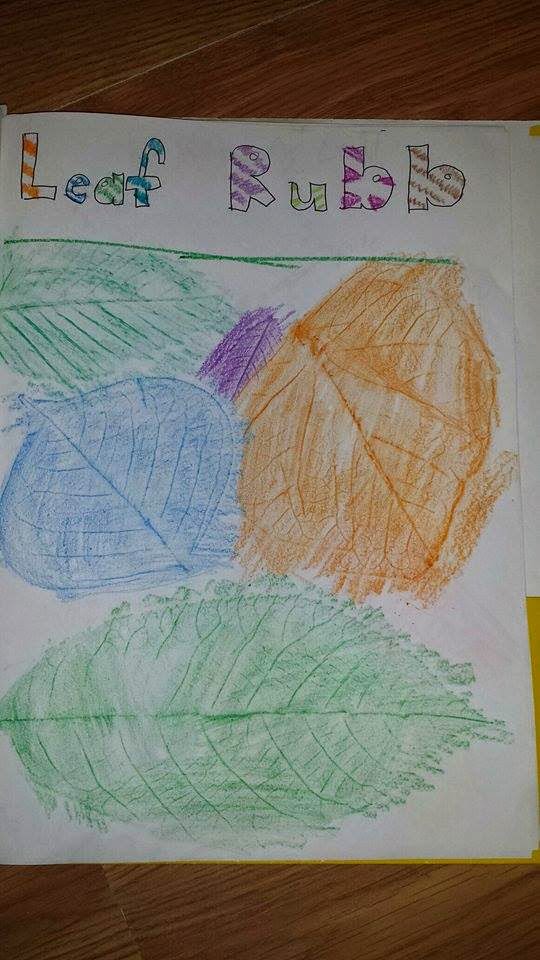
After a nature walk, she came in and made leaf rubbings to study the different types of veins each leaf had. 

She chose the leaf she liked best, made a leaf rubbing of it, and then labeled the parts of the leaves.

When we planted our tomato plants, she measured then every other day and then wrote her findings on the Excel paper she created. 


     Also in her portfolio are the different work sheets and printable information she learned about.
Information on plants from 'Instructor Web'
A Quiz from NeoK12 she printed out. 
    
   Inside of her 'Science Notebook' are journaling questions, written notes from books we read from the library that she did not want to forget, recorded observations and drawings. For example, when we were doing our 'Winter Tomato' experiment. Not only did she put her measurements in the Excel table, she also drew and wrote about the progress and growth of the plant. 


Water Filtration Project


 Learning about Container Gardens


How to Grow a Garden

   Portfolios and Notebooks are not just for science. They are great when you are working on a 'Theme" study unit and are pulling from various sources. Math, literature, reading, and geography can also have their own spiral notebook and folder.

At the beginning of the school season, our local Big Box Store has these and other supplies for super cheap! Stock up!


Disclosure: I am Amazon Affiliate and may receive a small compensation for including links on my blog. Buying through my links is not necessary, just appreciated. Amazon does not charge extra for linked items recommended by their affiliates.  I only recommend products that I use and trust OR plan on using in the future. Please buy responsibly and do your own product research before buying anything online.