"All the gardening knowledge in the world will be of no use,
if you do not have seeds to sow." Kamay Flemens
For years we have saved seed packets from various stores. Just recently choosing to buy heirlooms to grow and save. Heirlooms are seeds that have been grown, harvested, and saved from generation to generation. However, seeds bought in packets, do not last forever. My endless thoughts of 'what if there were no stores' prompted me to get serious about saving our own seeds from the garden. Because I believe in teaching and learning as a family, we researched how to save seeds, picked the best fruits, and harvested them together. (Although, my daughter actually did most of the seed harvesting for us. I assisted and took photos. :) )
I heard once, when saving seeds, to use the best of the best. Best plant, best producer, best tasting fruits and vegetables. We did not harvest seeds from our mini plants because we never want mini plants again! We still have plenty of the cherry tomato seed packets, so we did not save those either. We also choose plants we knew we would eat or be able to use for trade or barter. There is no point saving seeds from plant varieties your family turns their noses up to unless you have another use for them.
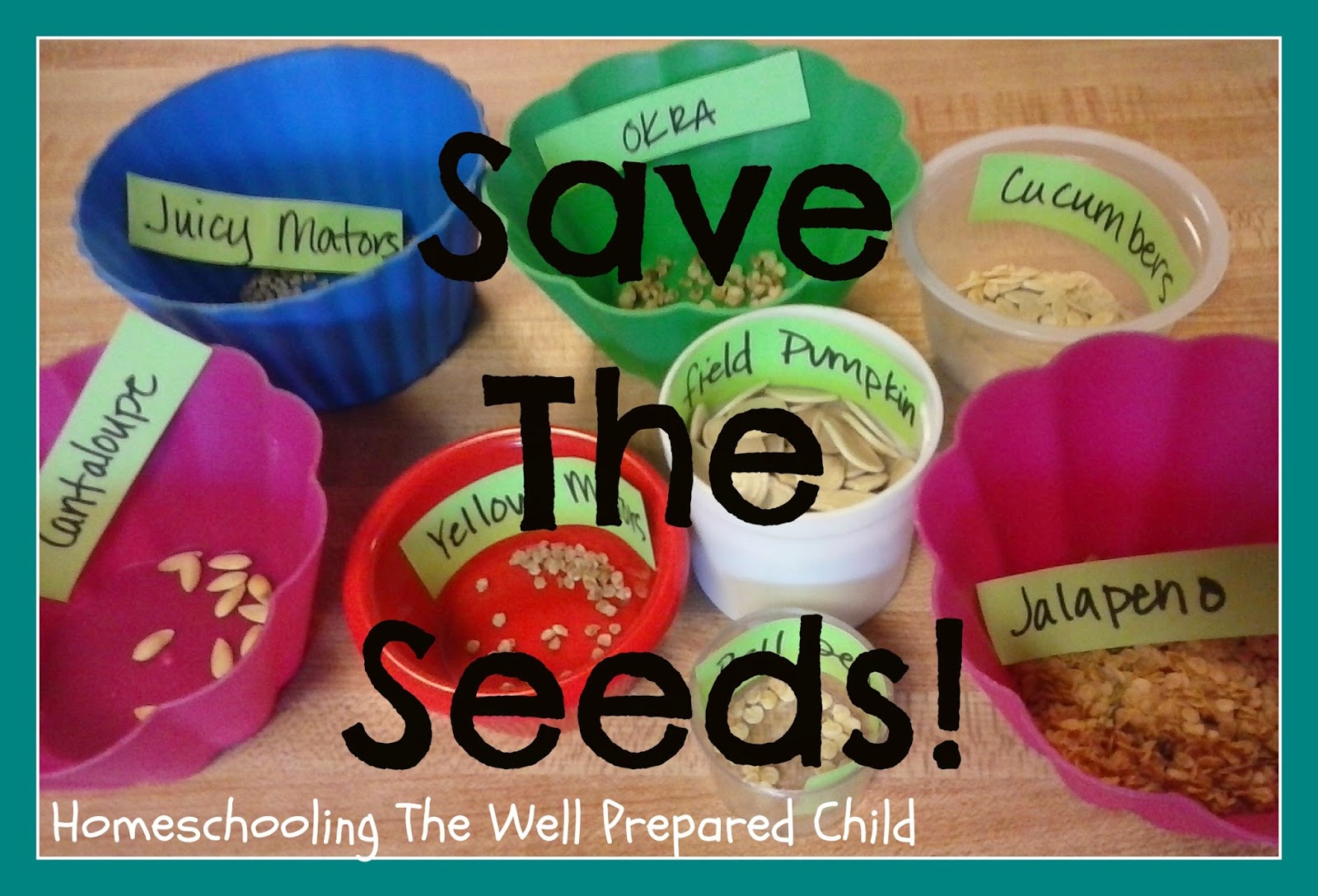
Here is a bit of what we saved. Not everything was photographed...
.jpg)
Okra- Carefully split the okra length wise, being careful not to cut the tiny seed balls. Use your thumb to gently pop the seeds out. When finished, make sure all green plant material is removed. Set aside for a week or two to insure full dryness. I am interested to see if this worked. They looked nothing like what I used from my store bought seed packet.
 They dried all wrinkly and I don't remember the seeds in the packet looking quite like that. This photo is before they dried fully.
Field Pumpkins- Carve open pumpkin top and remove all seeds. Rinse seeds in a strainer and make sure all pumpkin pulp is removed. They sat in the strainer for a few hours so that most of the water dripped away. Then, we placed the seeds on a plastic plate and moved them around often to insure even dryness and to keep them from sticking together.
Cucumbers- While making pickles, we had tons and tons of seeds left in the bowl from cutting the cucumbers. My daughter just collected them from the bottom of the bowl and took out all the seeds that had been cut in half. She used a strainer to wash them and make sure there were no pieces of flesh with them. Just like the pumpkins, we let them stay in the strainer for a few hours to make sure the excess water had time to drip off.
Jalapenos- Although we do not eat these much except for in salsa and for spicy pickles, we saved the seeds from some jalapenos we used for a FAIL at cheddar poppers. While we cored them, we dropped the seeds into a bowl. They dried in the bowl for a couple of weeks.
(When harvesting seeds from any spicy pepper, please use gloves! USE THEM! The seeds and the core are spicier than the green flesh. Even though I washed my hands thoroughly, and my hands did not burn, everywhere I touched on my body after that BURNED LIKE WILD FIRE! I just so happened to be suffering from allergies and had itchy eyes. It was brutal! If you do happen to get burned by the oils in the jalapenos, milk helps. I used a washcloth to scrub my hands and face with the milk. Raw milk from any source is better. Raw sources include cows, goats and even humans. Yes, booby juice works too, or so I hear.. no booby juice around my house anymore.)
Cantalupe- A friend of mine brought a cantaloupe to me from her father's garden. It had a lovely texture and was sweet and juicy. After digging out the seeds from the center, I placed them in the strainer and washed all the goo away from them. They drip dried and were placed on a plate to finish the drying process.
Bell Peppers- They have been a test this year. They were not as big as a store bought bell pepper. I am not a big fan of them, but I wanted to use them in salsa. I never got the chance. We did not have the tomatoes we needed at the time to make salsa with them. When we had tomatoes, I had already cut up the bell peppers to save seeds or had given them away. We did test eat them raw. It is not something my family enjoyed. They will be good for trading and bartering if needed.
 Tomatoes- Now this one I will go into more depth on in another post. They are a huge staple in my household and I believe we could nearly live off of them. My whole family loves tomatoes. Before we got serious in seed preservation and looked up how to save tomato seeds, we tried a couple of ways to dry the seeds. First, we took the seed pulp from a tomato we cut and placed them on paper towels. The seeds stuck to the paper towel as it dried and they were not very nice looking. I tested one to see if it would germinate, and it did. Then we brainstormed ideas on how to do it so they would come out cleaner.. but that is all in THIS post. :)
Now at this point, can you imagine what my kitchen looked like? There were plates, cups, bowls, and paper towels all over the place. It drove me nuts! I don't have very much room in our house. There is no pantry, laundry room, spare room at all to store all of the drying seed containers we had at this point. I finally got smart and gathered every small container we have and put all of them in a casserole pan. Safe, secured, compact storage! It took a few weeks to actually feel they were all sufficiently dry enough to store away. We used a variety of different small recycled packages to store our seeds in. A variety, because, we couldn't eat enough Tic Tacs fast enough. We are all about FREEcyle! :D
Have you tried seed preservation?
Save The Seeds!
More great seed saving advice and FREE PRINTABLE SEED PACKETS at 104 Homestead.
For a great definition of heirlooms, hybrids, organics and all the other seed lingo, check out Underwood Gardens post.
Want to start your own vault of survival gardening seeds without preserving them yourself? Survival-Seed-Vault-
This post contains my Amazon affiliate link to a survival seed vault. Although, I have not ordered from them, it is something I would like to purchase in the future. If you happen to buy one, let me know what you think of it!